Over the past few years, web hosting has undergone a dramatic change. Web hosting services have changed the way websites perform. There are several kinds of services but today we will talk about the options that are available for reseller hosting providers. They are Linux Reseller Hosting and Windows Reseller Hosting. Before we understand the fundamental differences between the two, let’s find out what is reseller hosting.
Reseller Hosting
In simple terms, reseller hosting is a form of web hosting where an account owner can use his dedicated hard drive space and allotted bandwidth for the purpose of reselling to the websites of third parties. Sometimes, a reseller can take a dedicated server from a hosting company (Linux or Windows) on rent and further let it out to third parties.
Most website users either are with Linux or Windows. This has got to do with the uptime. Both platforms ensure that your website is up 99% of the time.
1. Customization
One of the main differences between a Linux Reseller Hostingplan and the one provided by Windows is about customization. While you can experiment with both the players in several ways, Linux is way more customizable than Windows. The latter has more features than its counterpart and that is why many developers and administrators find Linux very customer- friendly.
2. Applications
Different reseller hosting services have different applications. Linux and Windows both have their own array of applications but the latter has an edge when it comes to numbers and versatility. This has got to do with the open source nature of Linux. Any developer can upload his app on the Linux platform and this makes it an attractive hosting provider to millions of website owners.
However, please note that if you are using Linux for web hosting but at the same time use the Windows OS, then some applications may not simply work.
3. Stability
While both the platforms are stable, Linux Reseller Hosting is more stable of the two. It being an open source platform, can work in several environments.This platform can be modified and developed every now and then.
4. .NET compatibility
It isn’t that Linux is superior to Windows in every possible way. When it comes to .NET compatibility, Windows steals the limelight. Web applications can be easily developed on a Windows hosting platform.
5. Cost advantages
Both the hosting platforms are affordable. But if you are feeling a cash crunch, then you should opt for Linux. It is free and that is why it is opted by so many developers and system administrators all around the world.
6. Ease of setup
Windows is easier to set up than its counterpart. All things said and done, Windows still retains its user-friendliness all these years.
7. Security
Opt for Linux reseller hosting because it is more secure than Windows. This holds true especially for people running their E-commerce businesses.
Conclusion
Choosing between the two will depend on your requirement and the cost flexibility. Both the hosting services have unique advantages. While Windows is easy to set up, Linux is cost effective, secure and is more versatile.

In all honesty, I"ve had this blog for a long time and I have bounced around different ad networks in the past. After removing the ad units from that company who stiffed me, I was back to square one. I should also note that I never quite liked Googles AdSense product, only because it feels like the "bottom of the barrel" of display ads. Not from a quality perspective, but from a revenue one.
From what I understand, you want Google advertising on your site, but you also want other big companies and agencies doing it as well. That way you maximize the demand and revenue.
After my negative experience I got recommend a company called Newor Media . And if I"m honest I wasn"t sold at first mostly because I couldn"t find much information on them. I did find a couple decent reviews on other sites, and after talking to someone there, I decided to give it a try. I will say that they are SUPER helpful. Every network I have ever worked with has been pretty short with me in terms of answers and getting going. They answered every question and it was a really encouraging process.
I"ve been running the ads for a few months and the earnings are about in line with what I was making with the other company. So I can"t really say if they are that much better than others, but where they do stand out is a point that I really want to make. The communication with them is unlike any other network I"ve ever worked it. Here is a case where they really are different:
They pushed the first payment to me on time with Paypal. But because I"m not in the U.S (and this happens for everyone I think), I got a fee taken out from Paypal. I emailed my representative about it, asking if there was a way to avoid that in the future.
They said that they couldn"t avoid the fee, but that they would REIMBURSE ALL FEES.... INCLUDING THE MOST RECENT PAYMENT! Not only that, but the reimbursement payment was received within 10 MINUTES! When have you ever been able to make a request like that without having to be forwarded to the "finance department" to then never be responded to.
The bottom line is that I love this company. I might be able to make more somewhere else, I"m not really sure, but they have a publisher for life with me. I"m not a huge site and I don"t generate a ton of income, but I feel like a very important client when I talk to them. It"s genuinely a breathe of fresh air in an industry that is ripe with fraud and non-responsiveness.
Microcomputers that have been created by the Raspberry Pi Foundation in 2012 have been hugely successful in sparking levels of creativity in young children and this UK based company began offering learn-to-code startup programs like pi-top an Kano. There is now a new startup that is making use of Pi electronics, and the device is known as Pip, a handheld console that offers a touchscreen, multiple ports, control buttons and speakers. The idea behind the device is to engage younger individuals with a game device that is retro but will also offer a code learning experience through a web based platform.

The amazing software platform being offered with Pip will offer the chance to begin coding in Python, HTML/CSS, JavaScript, Lua and PHP. The device offers step-by-step tutorials to get children started with coding and allows them to even make LEDs flash. While Pip is still a prototype, it will surely be a huge hit in the industry and will engage children who have an interest in coding and will provide them the education and resources needed to begin coding at a young age.
Future of Coding Coding has a great future, and even if children will not be using coding as a career, they can benefit from learning how to code with this new device that makes it easier than ever. With Pip, even the youngest coding enthusiasts will learn different languages and will be well on their way to creating their own codes, own games, own apps and more. It is the future of the electronic era and Pip allows the basic building blocks of coding to be mastered.Listening to what your visitors have to say, is always beneficial when planning new features or changes in your website. For a long time we"ve been limited to just setting up a contact form and hoping that quality feedback will follow, which unfortunately is not always the case.
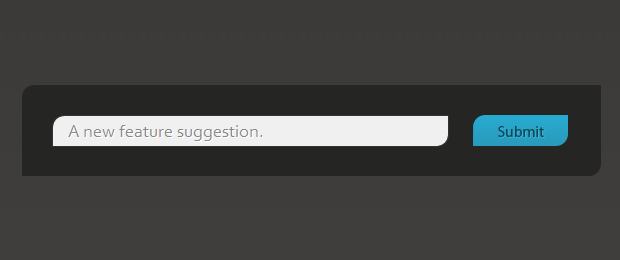
Today we are taking things up a notch - we are applying the same social principles that have brought success to sharing sites such as Digg and delicious, and encourage visitors to suggest and vote on features that they want implemented on your website.
The XHTMLStarting with the new HTML5 doctype, we define the opening and closing head and title tags, and include the main stylesheet of the app - styles.css , in the document.
suggestions.php Feature Suggest w/ PHP, jQuery & MySQL | Tutorialzine Demo data = $arr; } } public function __get($property){ // This is a magic method that is called if we // access a property that does not exist. if(array_key_exists($property,$this->data)){ return $this->data[$property]; } return NULL; } public function __toString() { // This is a magic method which is called when // converting the object to string: return "The __toString() method is used to create a string representation of the object. With its help we can build the HTML markup, complete with the suggestion title and number of votes.
The __get() method is used to route the access to undefined properties of the class to the $data array. This means that if we access $obj->suggestion , and this property is undefined, it is going to be fetched from the $data array, and returned to us as if it existed. This way we can just pass an array to the constructor, instead of setting up all the properties. We are using this when creating an object in ajax.php .
Now lets proceed with the generation of the unordered list on the front page.
suggestions.php require "connect.php"; require "suggestion.class.php"; // Converting the IP to a number. This is a more effective way // to store it in the database: $ip = sprintf("%u",ip2long($_SERVER["REMOTE_ADDR"])); // The following query uses a left join to select // all the suggestions and in the same time determine // whether the user has voted on them. $result = $mysqli->query(" SELECT s.*, if (v.ip IS NULL,0,1) AS have_voted FROM suggestions AS s LEFT JOIN suggestions_votes AS v ON(s.id = v.suggestion_id AND v.day = CURRENT_DATE AND v.ip = $ip) ORDER BY s.rating DESC, s.id DESC "); $str = ""; if(!$mysqli->error) { // Generating the UL $str = "After running the query, we use the fetch_object() method of the $result object. This method creates an object of the given class for every row in the result, and assigns the columns of that row to the object as public properties.
PHP also manages the AJAX requests sent by jQuery. This is done in ajax.php . To distinguish one AJAX action from another, the script takes a $_GET["action"] parameter, which can have one of two values - "vote " or "submit ".
ajax.php require "connect.php"; require "suggestion.class.php"; // If the request did not come from AJAX, exit: if($_SERVER["HTTP_X_REQUESTED_WITH"] !="XMLHttpRequest"){ exit; } // Converting the IP to a number. This is a more effective way // to store it in the database: $ip = sprintf("%u",ip2long($_SERVER["REMOTE_ADDR"])); if($_GET["action"] == "vote"){ $v = (int)$_GET["vote"]; $id = (int)$_GET["id"]; if($v != -1 && $v != 1){ exit; } // Checking to see whether such a suggest item id exists: if(!$mysqli->query("SELECT 1 FROM suggestions WHERE id = $id")->num_rows){ exit; } // The id, ip and day fields are set as a primary key. // The query will fail if we try to insert a duplicate key, // which means that a visitor can vote only once per day. $mysqli->query(" INSERT INTO suggestions_votes (suggestion_id,ip,day,vote) VALUES ($id, $ip, CURRENT_DATE, $v) "); if($mysqli->affected_rows == 1) { $mysqli->query(" UPDATE suggestions SET ".($v == 1 ? "votes_up = votes_up + 1" : "votes_down = votes_down + 1").", rating = rating + $v WHERE id = $id "); } } else if($_GET["action"] == "submit"){ // Stripping the content $_GET["content"] = htmlspecialchars(strip_tags($_GET["content"])); if(mb_strlen($_GET["content"],"utf-8")query("INSERT INTO suggestions SET suggestion = "".$mysqli->real_escape_string($_GET["content"])."""); // Outputting the HTML of the newly created suggestion in a JSON format. // We are using (string) to trigger the magic __toString() method. echo json_encode(array("html" => (string)(new Suggestion(array("id" => $mysqli->insert_id, "suggestion" => $_GET["content"]))))); }When jQuery fires the "vote " request, it does not expect any return values, so the script does not output any. In the "submit " action, however, jQuery expects a JSON object to be returned, containing the HTML markup of the suggestion that was just inserted. This is where we create a new Suggestion object for the sole purpose of using its __toString() magic method and converting it with the inbuilt json_encode() function.
 The jQuery
All of the jQuery code resides in script.js . It listens for click events on the green and red arrows. But as suggestions can be inserted at any point, we are using the live() jQuery method, so we can listen for the event even on elements that are not yet created.
script.js $(document).ready(function(){ var ul = $("ul.suggestions"); // Listening of a click on a UP or DOWN arrow: $("div.vote span").live("click",function(){ var elem = $(this), parent = elem.parent(), li = elem.closest("li"), ratingDiv = li.find(".rating"), id = li.attr("id").replace("s",""), v = 1; // If the user"s already voted: if(parent.hasClass("inactive")){ return false; } parent.removeClass("active").addClass("inactive"); if(elem.hasClass("down")){ v = -1; } // Incrementing the counter on the right: ratingDiv.text(v + +ratingDiv.text()); // Turning all the LI elements into an array // and sorting it on the number of votes: var arr = $.makeArray(ul.find("li")).sort(function(l,r){ return +$(".rating",r).text() - +$(".rating",l).text(); }); // Adding the sorted LIs to the UL ul.html(arr); // Sending an AJAX request $.get("ajax.php",{action:"vote",vote:v,"id":id}); }); $("#suggest").submit(function(){ var form = $(this), textField = $("#suggestionText"); // Preventing double submits: if(form.hasClass("working") || textField.val().length